


If you’ve ever applied for a Schengen visa, you already know the mixed feeling with low-key panic. Flights? Checked. Documents? Mostly checked. Then comes the ultimate question that sends everyone into a coil that “Do my hotel bookings need to be refundable for a Schengen visa?
If you’ve Googled this at 2 a.m., trust me you are not the only then. Let’s break it down casually, clearly, and without embassy-style terminology.
First Things First: Why Do They Even Care About Hotels?
From the embassy’s point of view, hotel bookings answer one simple question: Where are you sleeping, and are you planning to leave? They are not judging your hotel aesthetics or whether you chose a 3-star or a palace. What their main moto is to have a proof whether:
- You have a planned stay or not
- You’re not planning to disappear into Europe forever
- And your trip has a start and end
Hotel bookings are basically your way of saying, “ease up on”, I’ve got a plan.
So Refundable or Non-Refundable?
Here’s the truth, it always a safe choice doing refundable bookings. Refundable hotel bookings are not officially mandatory, but they are strongly recommended. Think of them as the embassy’s comfort blanket.
You would ask why? Because Schengen visas can get rejected even with perfect documents, and embassies don’t want you losing money unnecessarily. That’s the reason refundable bookings act as a smart and flexible planning.
Most embassies quietly expect applicants to book hotels that can be cancelled. That’s why you’ll often hear visa experts chanting the same mantra “Book now, pay later.”
If your booking confirmation says, “Free cancellation until”, you’re doing it right.
Non-Refundable Bookings usually leads to High Risk, with Low Reward
Are non-refundable hotel bookings banned? Nope. Are they a bad idea before visa approval? Absolutely. Here’s why they’re risky:
- If your visa is refused, you are ultimately losing your money
- What it shows is that you’ve financially committed before approval
- And some embassies openly warn applicants not to pay upfront
If your visa does get approved, then it’s sure that there won’t be any problem. But until that stamp is on your passport, non-refundable bookings are basically a gambling you can consider.
Do You Need to Pay for the Hotel in Advance?
Let’s bust a very common myth. No, you do not need to fully pay for your hotel booking. Most embassies are perfectly fine with reservation confirmations, pay-at-hotel bookings, free cancellation bookings and temporary holds.
What they care about is your proof of accommodation, and not proof that your bank account cried.
What About Dummy or Temporary Bookings?
Ah yes, the famous “dummy booking.” A dummy booking isn’t fake rather it’s just a real reservation with no payment or one that’s fully cancellable. These are widely used and usually accepted. But here’s the line you should never cross:
- Real, cancellable booking is fine
- But showing a fake hotel confirmation often leads to visa refusal and possibly future troubles
Embassies sometimes verify bookings directly with hotels. Submitting a fake one is like lying on a job application it almost always backfires.
Can I Use Airbnb, Hostels, or a Friend’s Place?
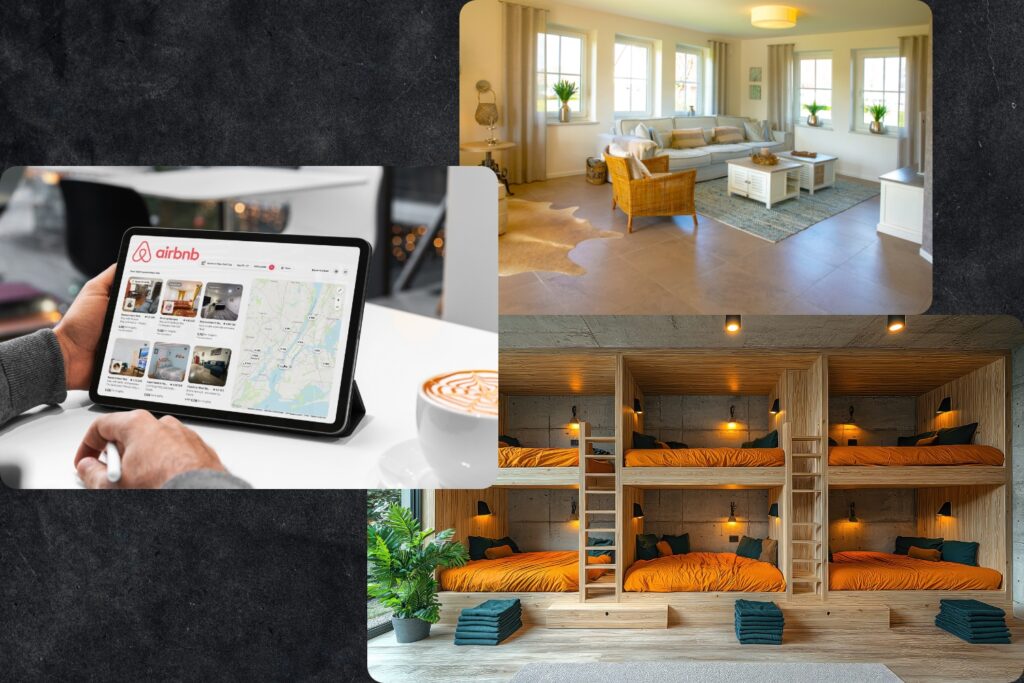
A concise answer would be yes, but an extended answer would be also yes but to do it in a proper manner.
- Airbnb istotally acceptable if thefull address is visible. The host’s name and contact details are shownand the reservation is confirmed.
- Hostels have same rules as hotels. Refundable options still make life easier.
- Andstaying with friends or family needs extra paperwork consisting of an invitation letter, host’s ID or residence permit, their address proof and sometimes a sponsorship form that depends on the country. And having no documents shows as a red flag.
Does the Country You’re Applying to Matter?
A big yes. It matters a lot. Some Schengen countries are known to be extra detail oriented. Such as Germany, Switzerland & Netherlands. But others are generally more relaxed. For example, France, Italy and Spain. But the fact is relaxed doesn’t mean careless. Your bookings should still look logical, practical, and consistent.
How Many Hotel Nights Should You Book?
The simple rule says that it should cover your entire stay. Your bookings should:
- Match your flight dates
- Match your itinerary
- And align with your entry and exit cities
If you’re visiting multiple countries, either show the bookings for each city, or at least show the bookings for the country where you’ll stay the longest. Because consistency is everything here that matters.
Common Hotel Booking Mistakes People Make
Let’s save you from unnecessary distress:
- Your hotel dates don’t match the flight dates
- You booked a hotel in Paris but saying you’ll stay in Rome
- Usually submit unverifiable or fake reservations
- Booking luxury hotels without showing financial capacity
Visa officers love one thing above all is the logic
Here’s The Smart, Stress-Free Strategy
Below is the safest way to handle hotel bookings for your Schengen visa:
- Always choose refundable hotels
- Go for free cancellation or pay-at-hotel
- Make sure your names are exactly what is in your passport
- Submit a clear booking confirmation
- And one thing you can change or cancel your bookings after visa approval if required
Think of hotel bookings as proof of intention, not a final commitment.
Final Word: Refundable or not?
Repayable hotel bookings may not be officially required but they’re the smartest move you can make. As hey protect your money, lessens tress, and keep embassy officers happy. And honestly, when you’re already dealing with paperwork, appointments, and timelines, why to add needless risk?
Just play it safe. Europe will still be there either with refund or with no refund. If you want help with:
- Choosing the right booking platform
- Writing a cover letter explaining flexible accommodation
- Country-specific visa tips
Just say the word, I’ve got you.